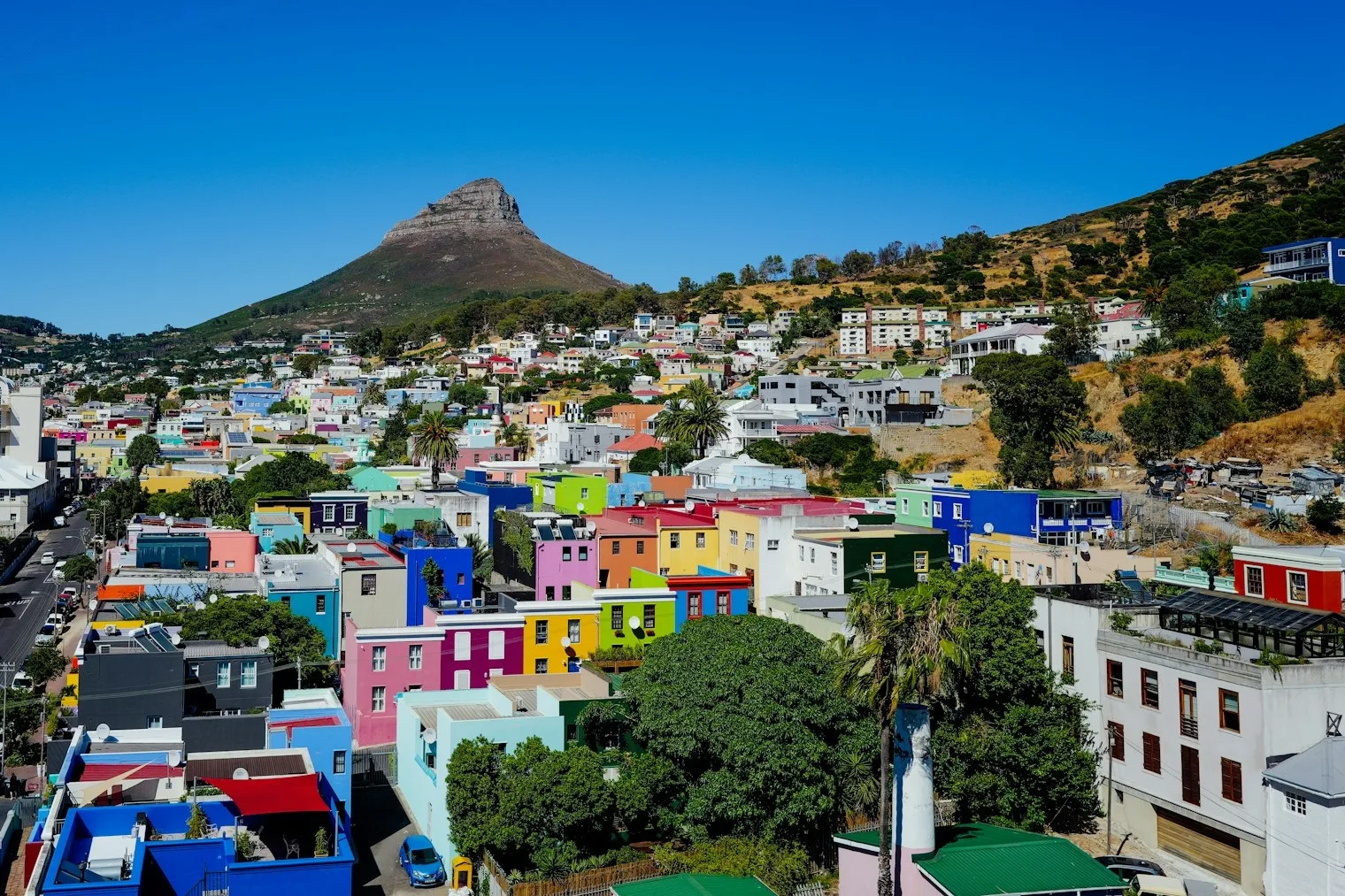
The façades of the Bo-Kaap are among the most photographed in Cape Town. Behind the colours there is a history, a faith, a music and a cuisine that shaped the city. Here is how to understand them before you walk in.
A neighbourhood above the Cape
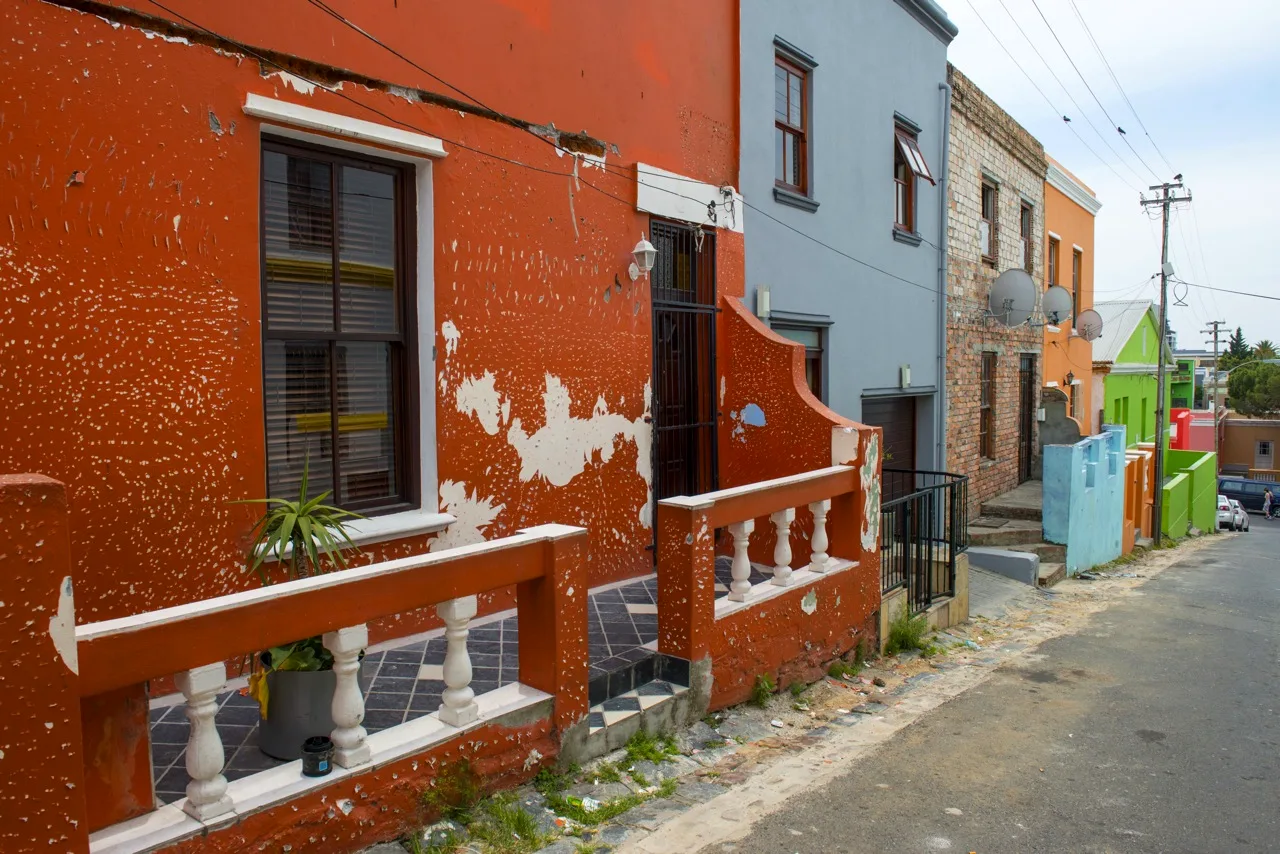
Bo-Kaap means “above the Cape” in Afrikaans, and the neighbourhood does sit on the slopes of Signal Hill, above the city centre. It is also known as the “Malay Quarter”. From the 1760s, rental houses were built there to house craftsmen and slaves of the Dutch company. After the abolition of slavery in 1834, freed families gradually bought their homes.
They are called the Cape Malays, even though their ancestors also came from India, Ceylon, Madagascar and East Africa, and not only from Malaysia. They are mostly Muslim, and their faith, cuisine and trades have left a deep mark on Cape Town.
Why these colours?
There are several explanations, and none is unanimous. The most widespread says that the bright paint celebrates regained freedom, first after emancipation, then after the end of apartheid, when families could finally own and decorate their homes. Others say that landlords once required tenants to whitewash their houses, and that colours came with ownership.
Whatever the version, remember that these façades are lived-in homes, with families, children, cars and routines. They are also under pressure: property prices are rising, and residents are fighting to preserve the neighbourhood’s character. Walk discreetly, and ask before photographing a person.
The mosques and the noon gun
The imam Tuan Guru, exiled from Indonesia in the late 18th century, founded the Auwal Mosque, opened in 1794 in the Bo-Kaap. It is considered the oldest in the country. Several other mosques have been added since, and the call to prayer sets the rhythm of the neighbourhood. In the street as near a place of worship, simple, modest dress is appreciated, and Fridays, the day of the main prayer, are best avoided for close visits.
Just above, on Signal Hill, the Noon Gun fires a cannon shot every day at noon (except Sundays and public holidays), a tradition more than two centuries old that once let sailors set their watches. It can be heard throughout the Bo-Kaap.
A language born in Qur’anic schools
The Bo-Kaap played a surprising role in the history of language. In the 19th century, teachers and imams there wrote religious texts in Afrikaans written in the Arabic alphabet, known as “Arabic-Afrikaans”. These texts are among the oldest written documents in Afrikaans, long before the language was standardised in Latin script.
This detail is a reminder that Afrikaans is not only the language of Dutch settlers: it was forged at the Cape, in the meeting of Dutch, Khoisan languages, Malay, Portuguese and the languages of the enslaved. The Cape Malays were essential players in that story.
Ramadan, Eid and neighbourhood celebrations
During Ramadan, the Bo-Kaap changes rhythm. At sunset, families break the fast with dates, soup, samosas and sweet fritters, and people visit one another’s homes. They also prepare boeber, a sweet drink of milk, vermicelli and spices, drunk warm.
Eid, which marks the end of the fast, is a day of celebration when people dress in new clothes and share large meals. If you pass through the neighbourhood at this time, stay discreet and respectful: these are family moments before they are moments to watch.
Tweede Nuwe Jaar: the minstrel carnival
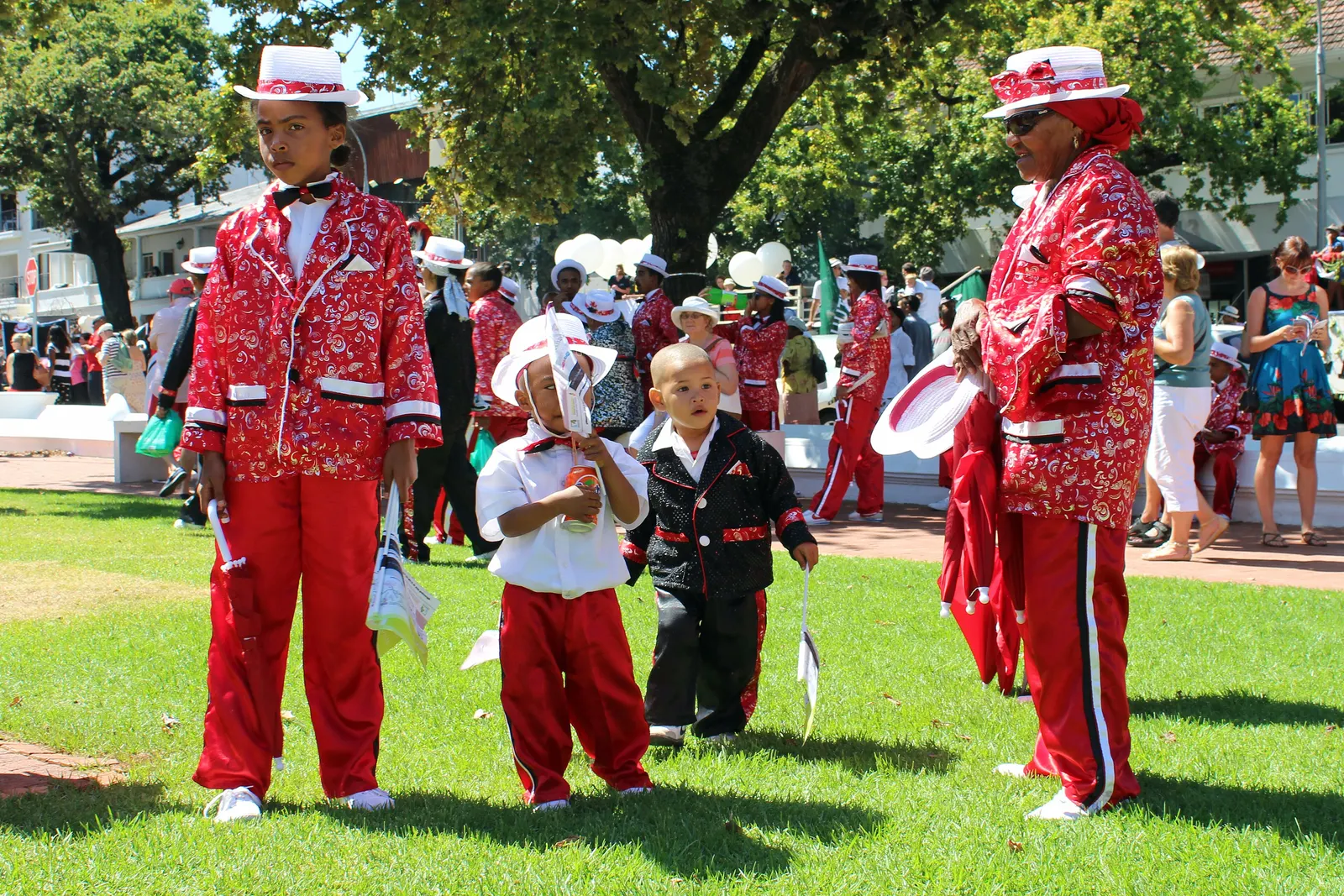
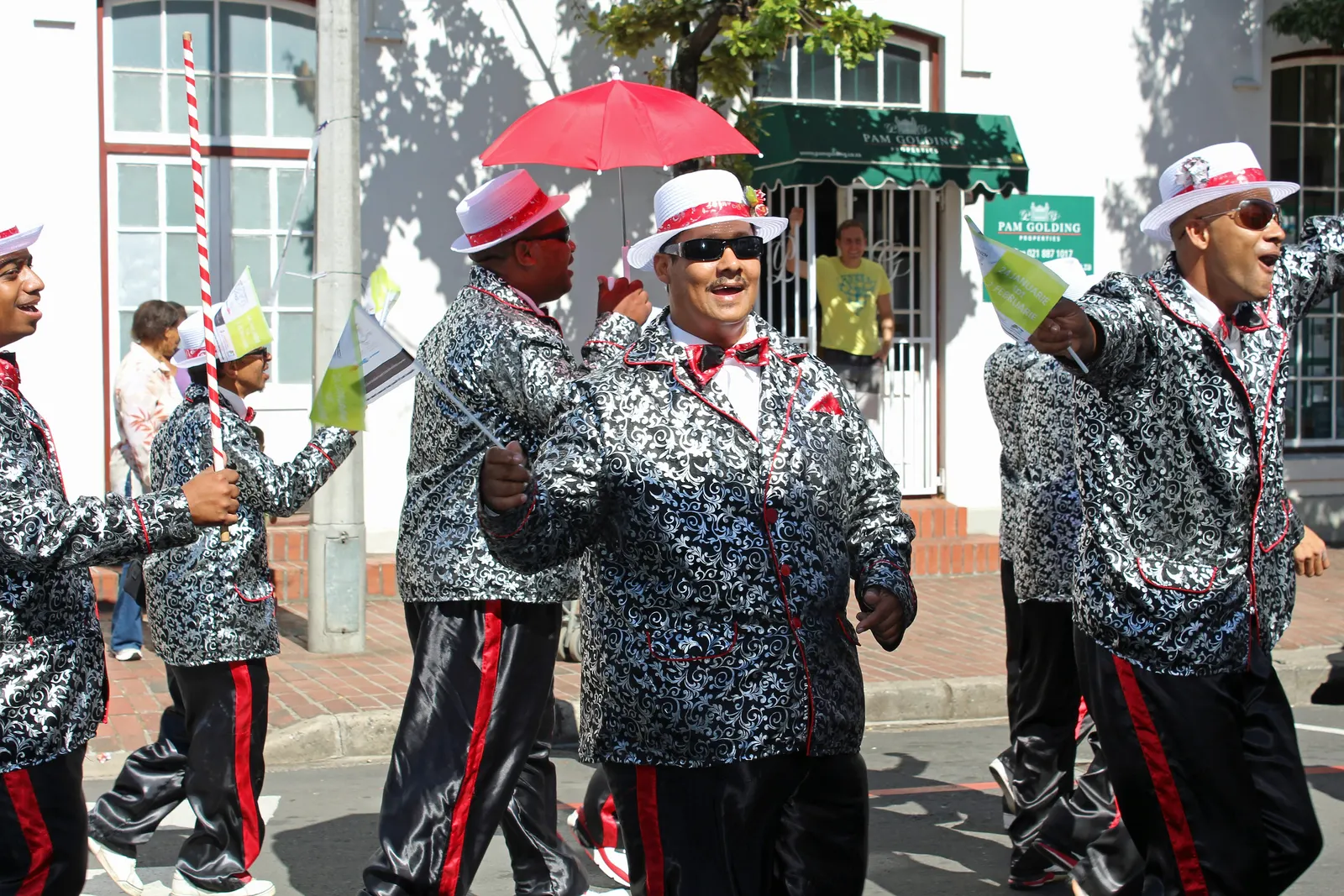
Every 2 January, Cape Town celebrates Tweede Nuwe Jaar, the “second New Year”. Tradition says that in the days of slavery, it was the only day off for the enslaved, the day after their masters’ celebrations. Today, thousands of musicians and singers parade in colourful satin costumes, with banjos, brass, drums and umbrellas, in what is known as the Kaapse Klopse (the Cape Minstrel carnival).
The music blends tunes of very diverse origins: Malay songs, brass bands, African rhythms, and even influences of minstrel troupes that came from America in the 19th century. The troupes rehearse for months, often in the neighbourhoods of the Cape Flats. If you are in Cape Town in early January, it is one of the finest street spectacles to be seen, and a chance to meet the city in a different light.
Cuisine, spices and know-how
Cape Malay culture is also lived at the table. The cooks of the Bo-Kaap passed down bobotie, mild curries, samosas, koesisters and pickled fish, detailed in our article What to eat in South Africa. Spices, patience and a sense of sharing are as much a part of the heritage as the houses.
To place the neighbourhood in Cape Town’s history, read District Six, the story of a neighbourhood erased, then a short history of South Africa.
Visiting the Bo-Kaap: practical tips
The best time is the morning, when the light is soft and the streets are quiet. The best-known streets are Wale Street, Chiappini Street and Rose Street, and the Bo-Kaap Museum, set in an 18th-century house, explains the life of Cape Malay families. Allow one to two hours, on foot, with good shoes: the streets are cobbled and steep.
A few simple rules: do not park in front of garages, do not block the street for a photo, avoid stepping onto pavements or front steps, and do not photograph people without their consent. You will be welcomed with a smile if you show that you respect the place.
Photo credits
Cover photo: Adrien Olichon on Unsplash (Unsplash licence), cropped and retouched. Other photos from Wikimedia Commons, used under their original licence (CC BY-SA). Bo-Kaap street: photo by Mathis Quintana. Minstrels: HelenOnline and HelenOnline (CC BY-SA 3.0). Photos resized.
Frequently asked questions
Why are the houses in the Bo-Kaap colourful?
There are several explanations. The most widespread sees a celebration of freedom, after emancipation and then after apartheid.
Who are the Cape Malays?
The descendants of enslaved people, craftsmen and exiles brought to the Cape from Asia and Africa from the 17th century, mostly Muslim.
What is Tweede Nuwe Jaar?
The “second New Year”, celebrated on 2 January in Cape Town with the Cape Minstrel carnival (Kaapse Klopse).
Can I take photos in the Bo-Kaap?
Yes, the façades can be photographed freely, but ask before photographing a person, and stay discreet: these are lived-in homes.