It is the first question I get, often before we even talk about roads or motorcycles: “Is it dangerous?” It is a fair one. You read everything and its opposite about South Africa, from enthusiastic travellers’ stories to official advice that sounds alarming. Here is what I think, after years of riding around Cape Town.
Is South Africa dangerous?
The short answer: not in itself. The honest answer: you need to know where you are going.
South Africa is a country of sharp contrasts. A few kilometres apart, you go from a seafront that looks like California to neighbourhoods where a visitor has no reason to be. The danger does not come from the country as a whole. It mostly comes from ending up in the wrong place at the wrong time, without realising it.
The vast majority of travellers have a wonderful trip without the slightest problem. In all my years on the road, nothing has ever happened to me. But they rarely owe it to luck. They owe it to a few simple rules, and often to someone who knows the ground.
The real trap: your GPS
This is the point almost nobody talks about, and it is the most important one.
The French Ministry of Foreign Affairs says it in black and white in its travel advice: in Cape Town, do not let your GPS guide you, as it may lead you towards townships or secondary roads.
A GPS looks for the shortest or fastest route. It does not know that a shortcut cuts through an area to avoid. Around Cape Town airport in particular, several cases of tourists sent into dangerous areas by their app made headlines, to the point that Google Maps and Waze changed some routes.
And it does not stop there. En route, an app like Waze can reroute you at any moment: an accident, a traffic jam, a closed road, and you are diverted down a road you would never have chosen. Alone, in a country you are discovering, you do not realise it until it is too late.
And there is the other side of the GPS: it makes you miss the best. It takes the motorway while the most beautiful roads go elsewhere, over a pass, through a wine valley or along a corniche above the ocean. You cannot tell it “let’s go that way instead”.
On your own, you are an easier target
This is not specific to South Africa, but it matters more here. A lone traveller, stopped at the roadside with a phone in hand looking for the way, is an easy target.
The official advice points the same way: avoid travelling alone in the evening, never hike alone on Table Mountain or Lion’s Head, and travel in company where possible. With two of you, and someone who knows the area, the risk drops noticeably.
Situations to avoid
A few rules apply to everyone:
Do not stop on the N2, the motorway linking the airport to central Cape Town, except in an absolute emergency.
Do not ride at night outside the towns. At night, only stop somewhere lit and busy, such as a petrol station.
Do not stop at the request of strangers, and do not pick up hitchhikers.
Leave nothing visible in the car or on the motorcycle.
Do not follow your GPS into residential areas you do not know, such as townships or the Cape Flats. They are not places for a visitor who is just discovering the city to pass through.
None of this stops you enjoying the country. These are habits to pick up from day one.
Is Cape Town safe for tourists?
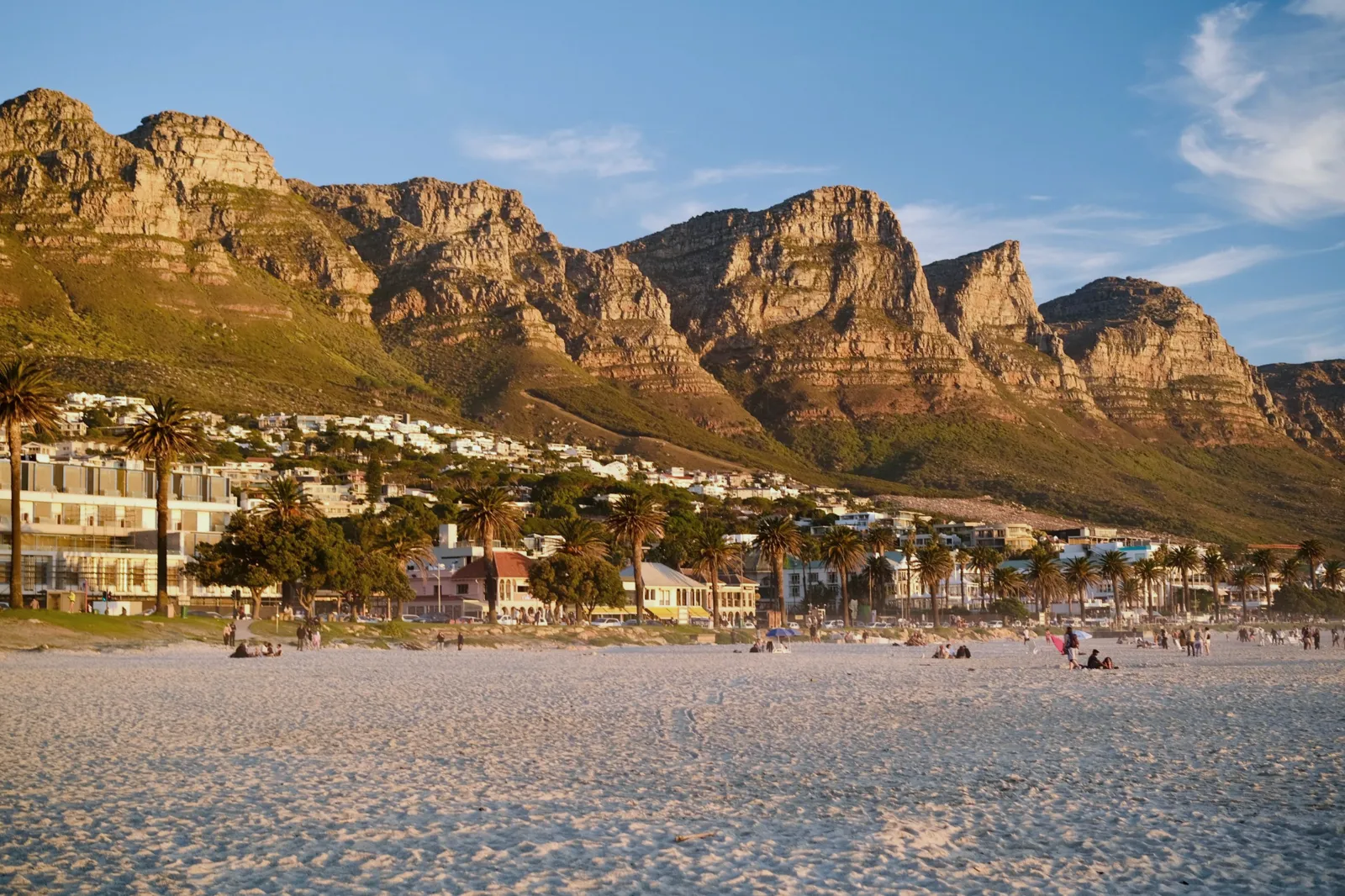
Yes and no. The city centre, the Waterfront, Camps Bay, the Peninsula, Franschhoek and Stellenbosch welcome millions of visitors every year, and the atmosphere is relaxed. But the city is sprawling, and the safe areas and the ones to avoid are sometimes very close together. That is precisely where the GPS becomes a risk.
The right reflex: plan your routes ahead with someone who knows the city, and do not improvise a shortcut.
On a motorcycle: a few extra habits
Riding in Cape Town is a real pleasure, but a few habits differ from Europe:
You ride on the left. At roundabouts and junctions, look right first.
Filtering through traffic is not customary, so it is best avoided.
Minibus taxis, the white Toyota vans, carry most of the population, for work and for everything else. They stop anywhere to pick up or drop off passengers and rarely follow the rules of the road: be wary at every junction.
During power cuts, treat a dead traffic light as a stop sign.
An International Driving Permit is compulsory, in addition to your national motorcycle licence.
To go further: Motorcycle safety in Cape Town: the habits that matter.
What a private guide changes
This is why many travellers choose to set off with a guide. And safety is often the first reason, well ahead of comfort.
With a guide:
You are never alone on the road.
The route is chosen by someone who knows every bend: the safe roads, and the most beautiful ones.
We adapt on the spot: an accident, wind, a wish to stop, we change route knowingly, not at the whim of an app.
You enjoy the ride instead of watching your phone.
And because all our tours are private, the guide is there for you alone: your pace, your stops, your day.
Frequently asked questions
Is Cape Town dangerous for tourists?
Not in the tourist areas, as long as you follow a few simple rules. The main risk is ending up by mistake in an area to avoid, often because of the GPS.
Can you rent a motorcycle and ride alone in Cape Town?
Yes, with a motorcycle licence and an international permit. But without knowing the ground, it is easy to take a wrong turn. A guide spares you that risk and shows you the most beautiful roads.
Which areas should you avoid in Cape Town?
Avoid following your GPS into residential areas you do not know, do not stop on the N2 and do not ride at night outside the towns.
Should you avoid travelling alone in South Africa?
No, but when travelling solo, it is best to limit evening journeys and not to hike alone. Being accompanied makes a big difference.
Source: France Diplomatie, Travel advice, South Africa.