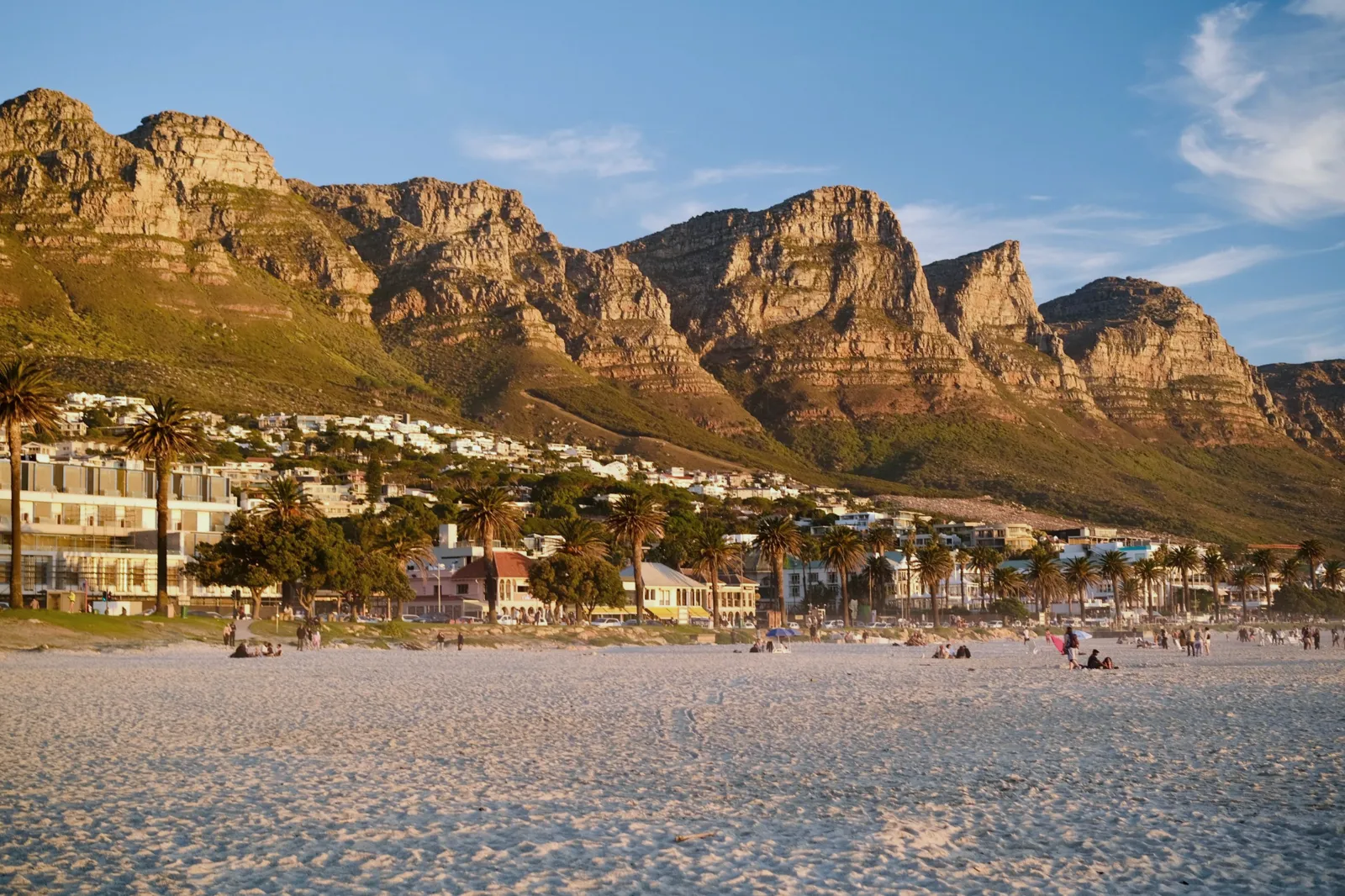
South Africa has 21 national parks, run by SANParks since 1926. Six of them are in the Western Cape, Cape Town’s province. The first one starts at the foot of the city-centre buildings; the furthest lies deep in the Karoo. Here is what you see in each, and the tips that keep you from losing an hour at the gate.
A floral kingdom of its own
Before the parks, a word on what links them: fynbos. It is the low, dense vegetation covering Cape Town’s mountains and coastline. The Cape region on its own makes up one of the planet’s six floral kingdoms, the smallest, and many of its plants grow nowhere else.
On a motorcycle you smell it before you see it: the scent changes with the season and the altitude. That is also why Cape parks look nothing like the safari picture. Here, nature means cliffs, lagoons, forests and plains of flowers.
Table Mountain National Park: the park inside the city
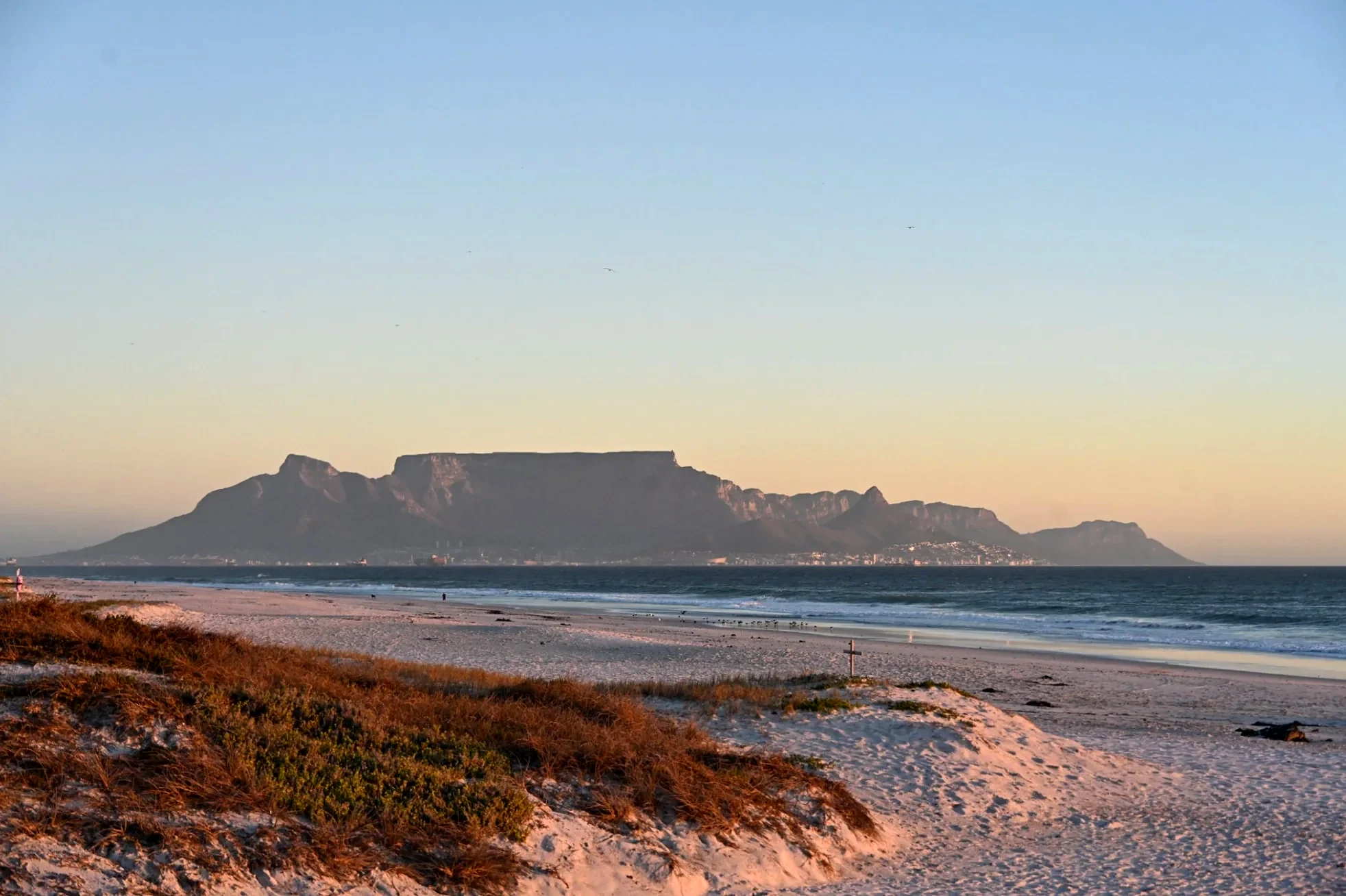
Created in 1998, this park follows the Cape Peninsula from Table Mountain down to Cape Point. It is not one fenced block: it runs between suburbs, beaches and coastal roads. You often enter it without noticing, and two sections charge an entry fee: the Cape of Good Hope reserve and the Boulders penguin colony.
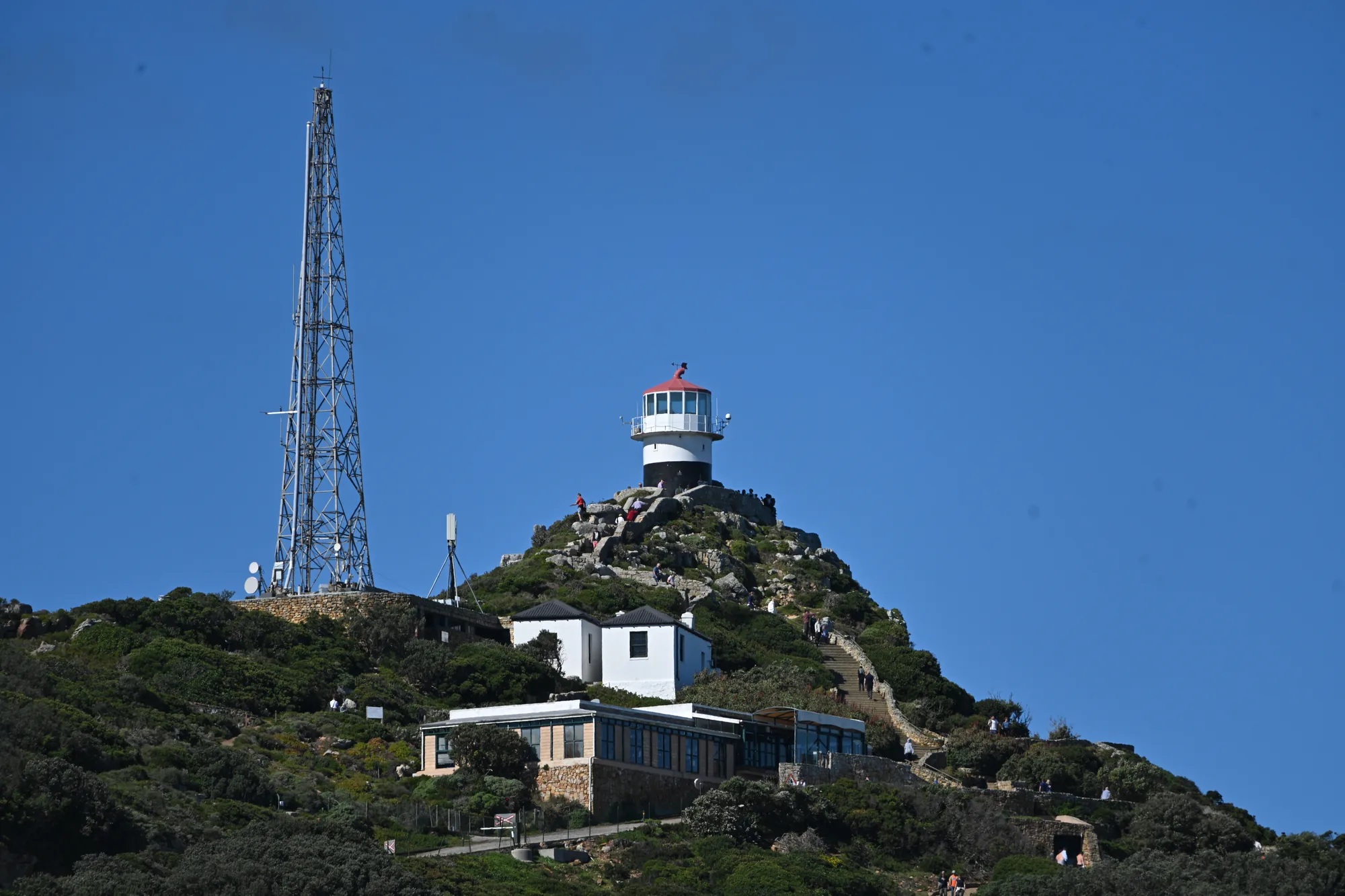
At Cape Point, you come for the cliffs, the lighthouse and the ostriches that sometimes cross the road. The baboons are at home here: leave no food in sight and keep your panniers closed.
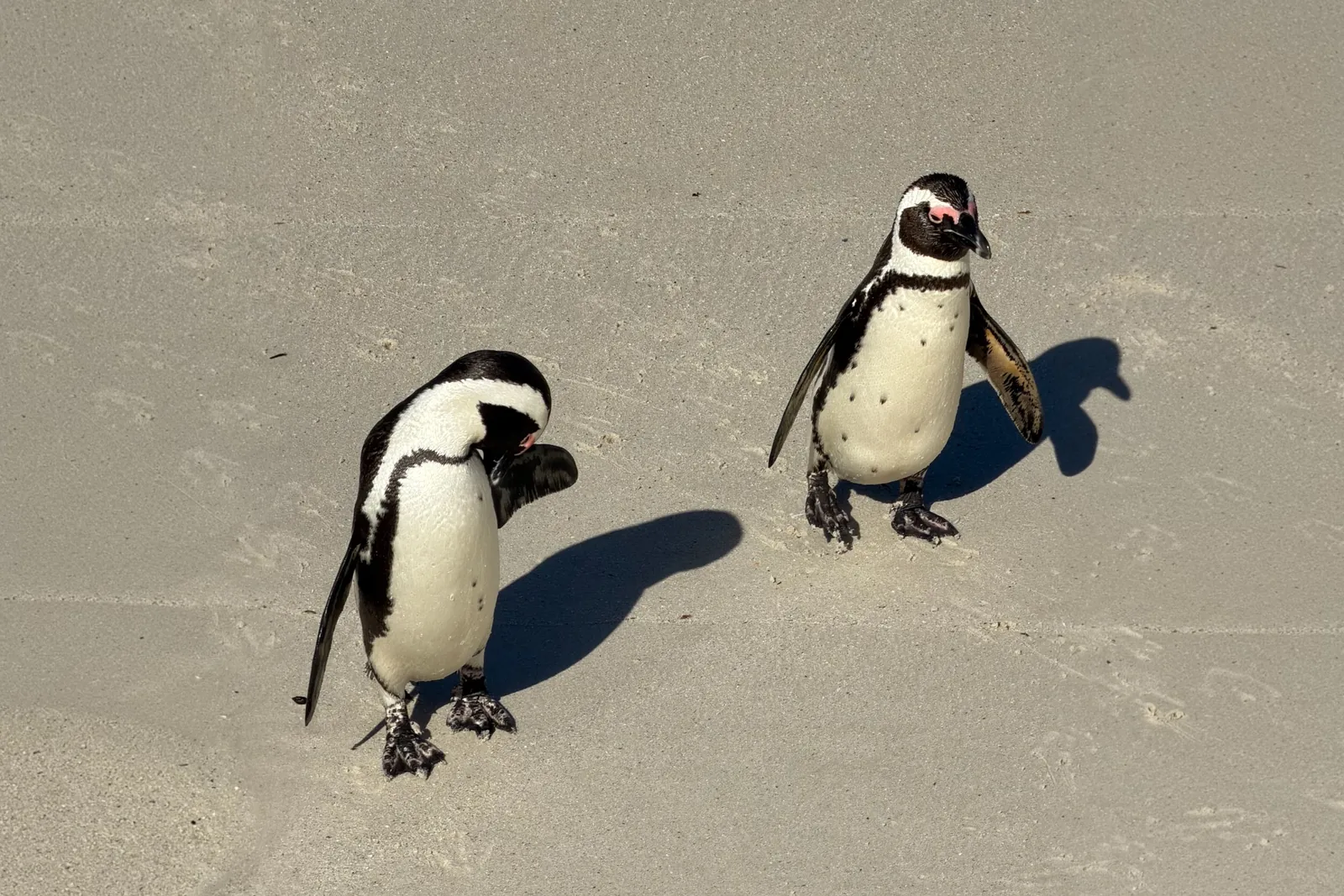
Boulders: walking among the penguins
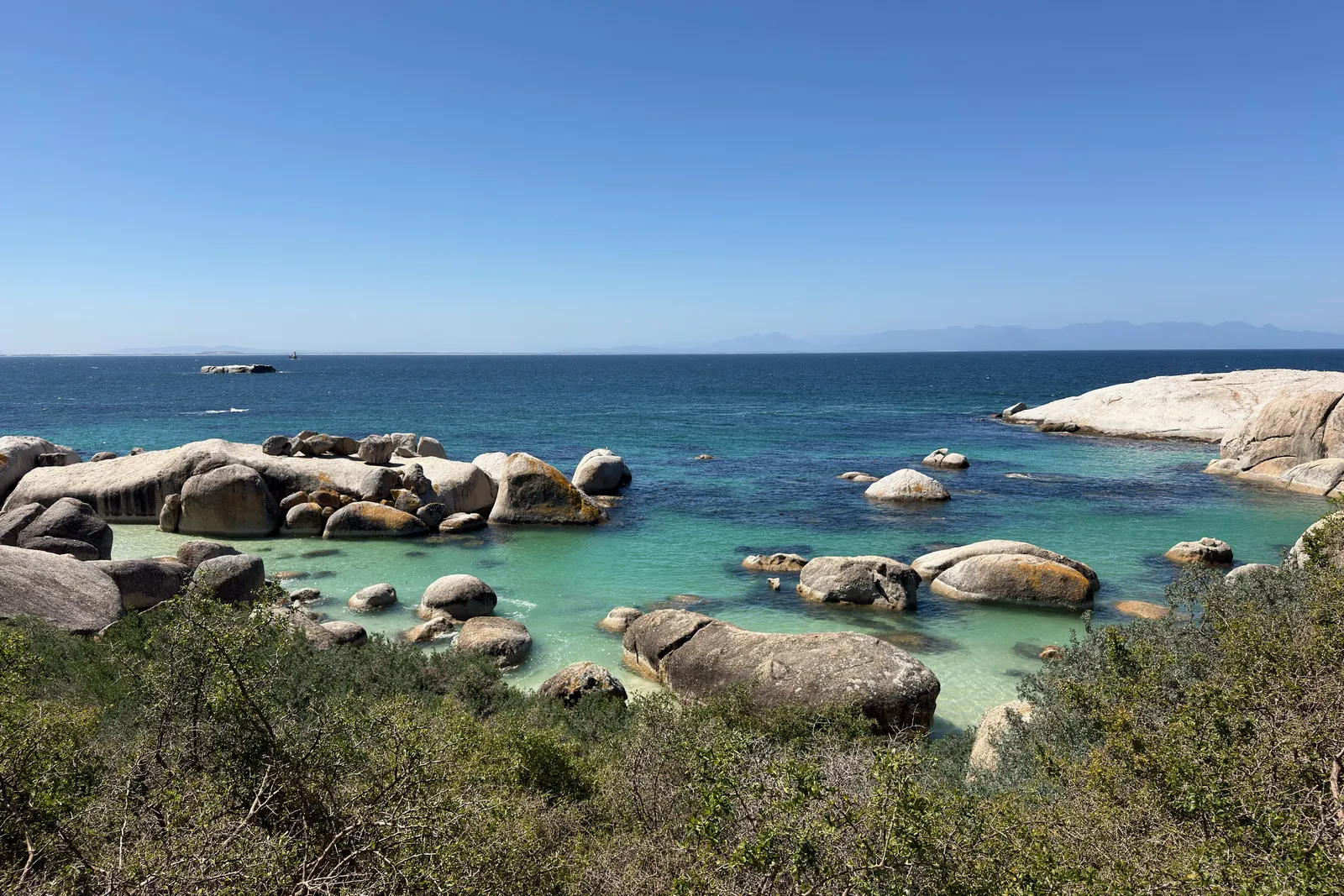
Most visitors watch the penguins from the wooden boardwalks. With my clients, I use the beach access: you walk on the sand and rocks, with the penguins a few metres away. The same ticket covers both the beach and the boardwalks: keep it, you will be asked for it at the second entrance.
Keep your distance and do not touch them: they are wild animals, and their beaks are sharp.
West Coast National Park: the lagoon and the flowers
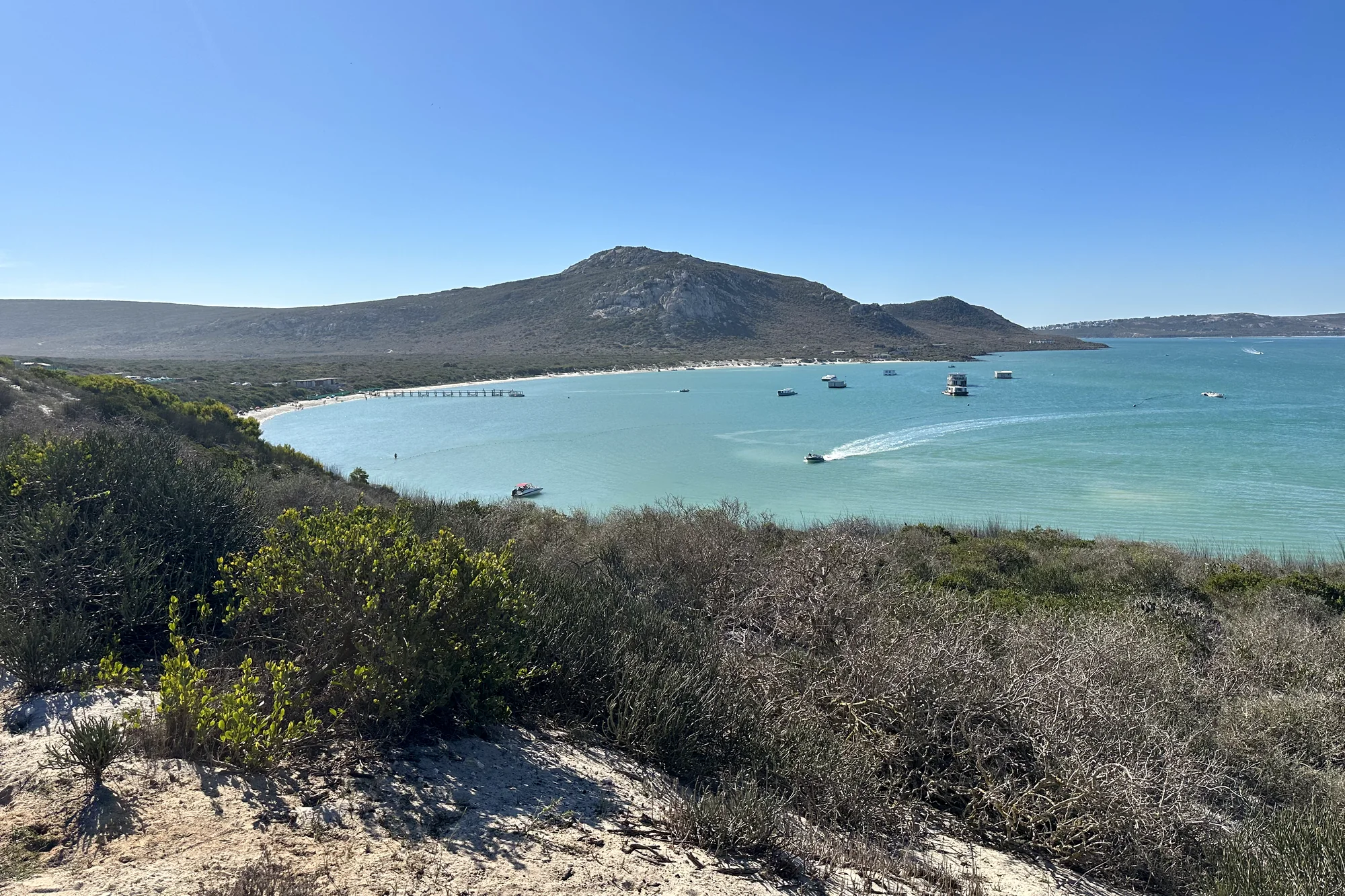
North of Cape Town, the West Coast park wraps around the Langebaan lagoon, calm turquoise water that comes as a surprise on this cold coast. The park is known for its birds: thousands of waders gather on the lagoon, which is part of a UNESCO biosphere reserve.
In August and September, it is flower season. The Postberg section only opens to the public during those two months, and the fields turn orange, white and yellow. Come early: on sunny days, the queue at the gate can be very long.
Agulhas National Park: the tip of Africa
Many people think Cape Point is the end of the continent. The true southernmost point is Cape Agulhas, about three hours’ drive from Cape Town. This is where the meeting of the Atlantic and Indian Oceans is officially placed. The park protects this low, wild coastline, with its lighthouse and a marker at the tip.
It is rarely a day trip. It fits naturally as a stop on a multi-day journey towards the Garden Route.
Garden Route National Park: forests, lakes and ocean
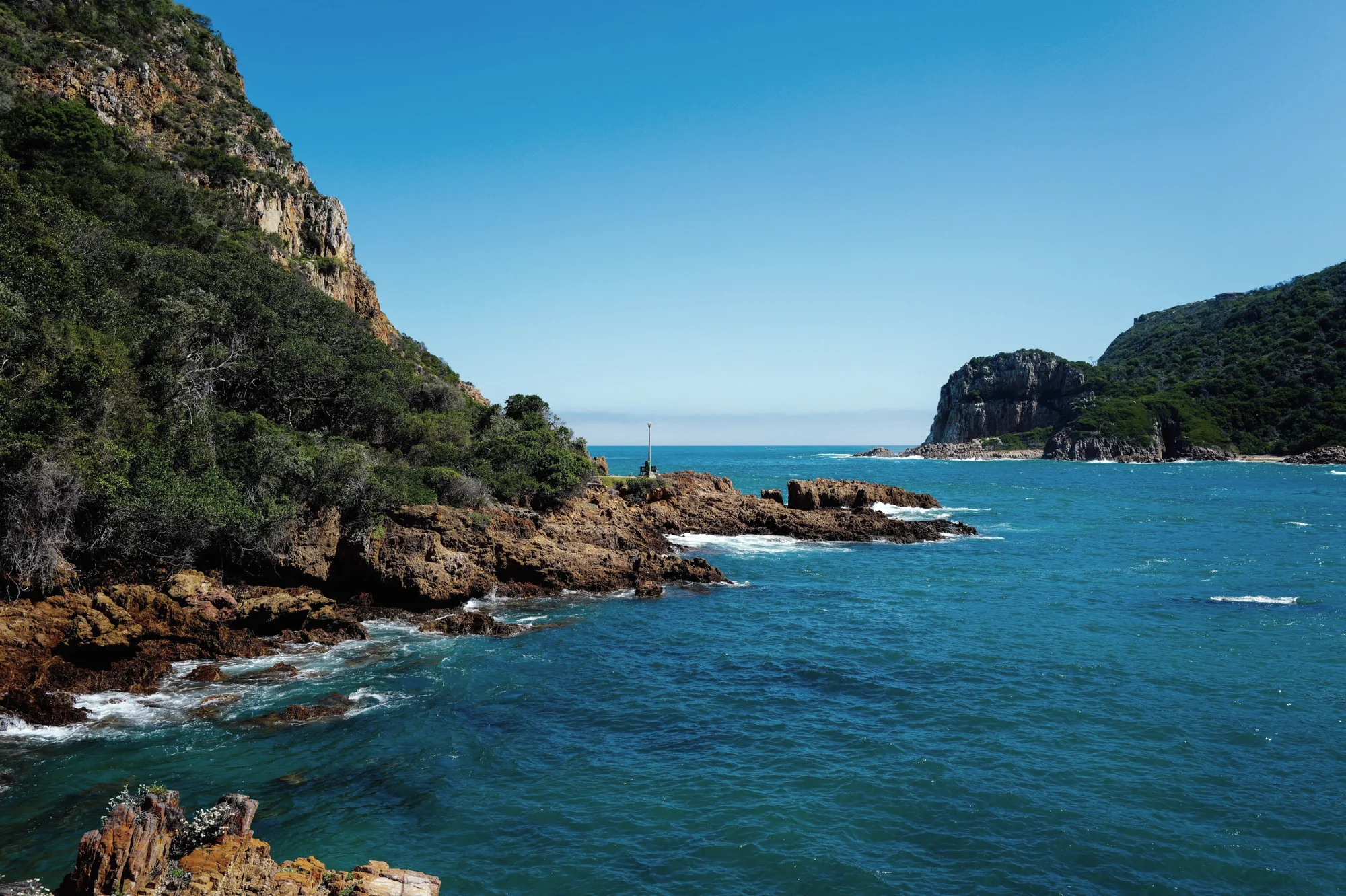
Created in 2009, this park groups three sections along the south coast: Wilderness and its lakes, Knysna and its forests, and Tsitsikamma, where the forest runs down to the ocean. In between, the road switches between mountain and seafront, which makes it one of the country’s finest motorcycle journeys.
Allow several days: the Garden Route is best taken slowly, with walking stops in the forests and gorges.
Karoo and Bontebok: the two quieter ones
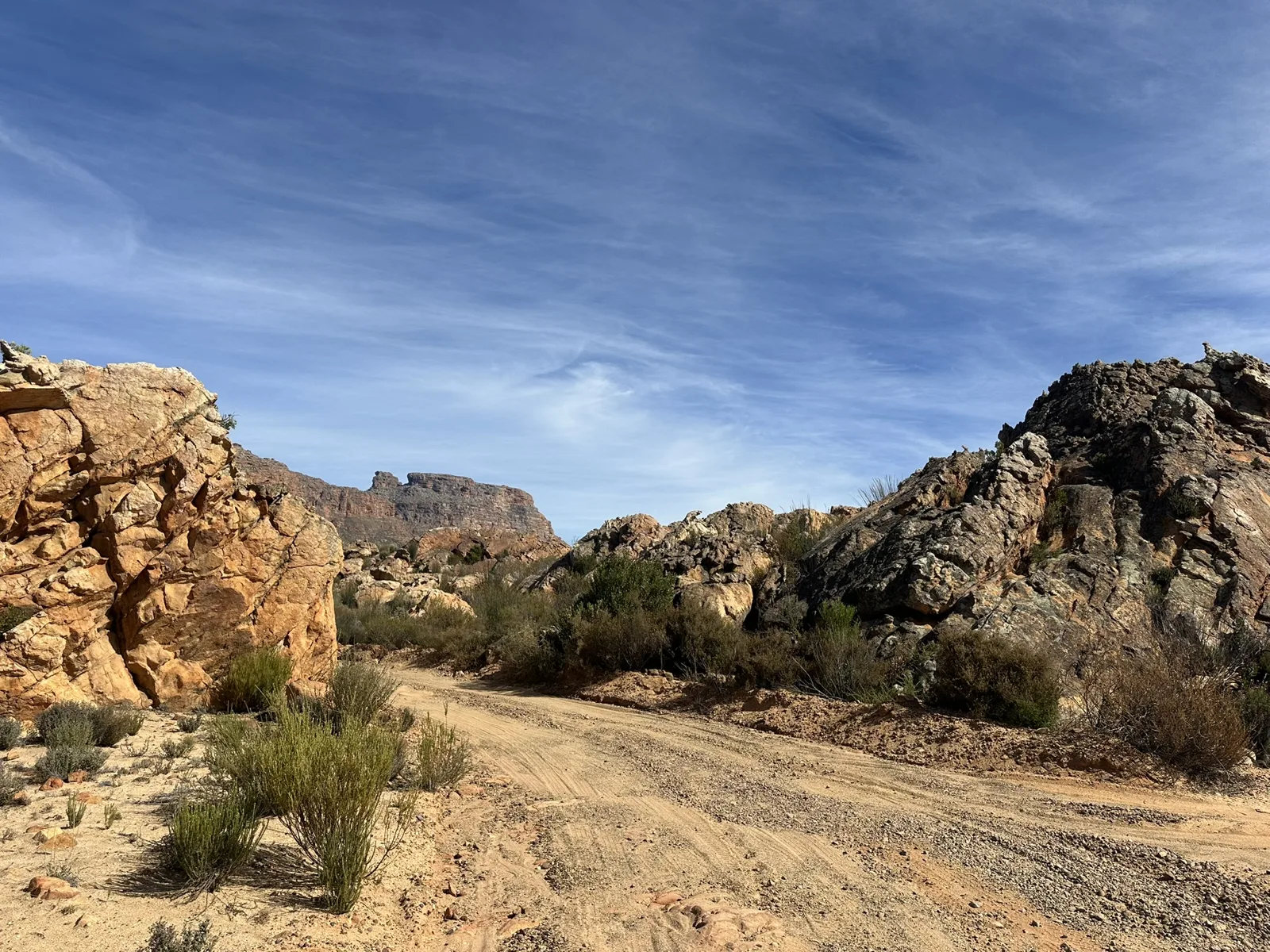
Inland, Karoo National Park (1979) offers a completely different setting: a semi-desert plateau, ochre rocks, wide open spaces and starry skies. Closer to the coast, near Swellendam, Bontebok National Park, opened in 1931, is one of the country’s oldest and smallest. It was created to save an antelope, the bontebok, which had nearly disappeared.
Our tips to save time
Buy your ticket online on the SANParks website. It arrives by e-mail with a QR code, and you have nothing to pay at the gate. Download it before you leave: at Cape Point, phone signal is weak.
Buy it the day before or that morning, once you have checked the weather. Six days or less before, a cancellation is no longer refunded, and a date change must be requested at least 48 hours ahead. Good news: the ticket stays valid for a few days after the chosen date, which gives you room if the wind picks up.
No cash: Cape Point and Boulders only take cards. No passport needed for international visitors, but each ticket is in the name of the person entering.
One ticket, one entry: you cannot leave and come back on the same ticket. And at Cape Point, the funicular up to the lighthouse is extra.
Arrive early: the light is better, the animals more active and the queue shorter. Since 1 November 2026, Cape Point costs R592 per international adult, and Boulders R282.
The peninsula in one day, with a guide
Table Mountain National Park can be explored in a day, by motorcycle or by van. I take care of the route and the order of the stops to avoid the crowds, and you enjoy the scenery. Park fees are paid on site.