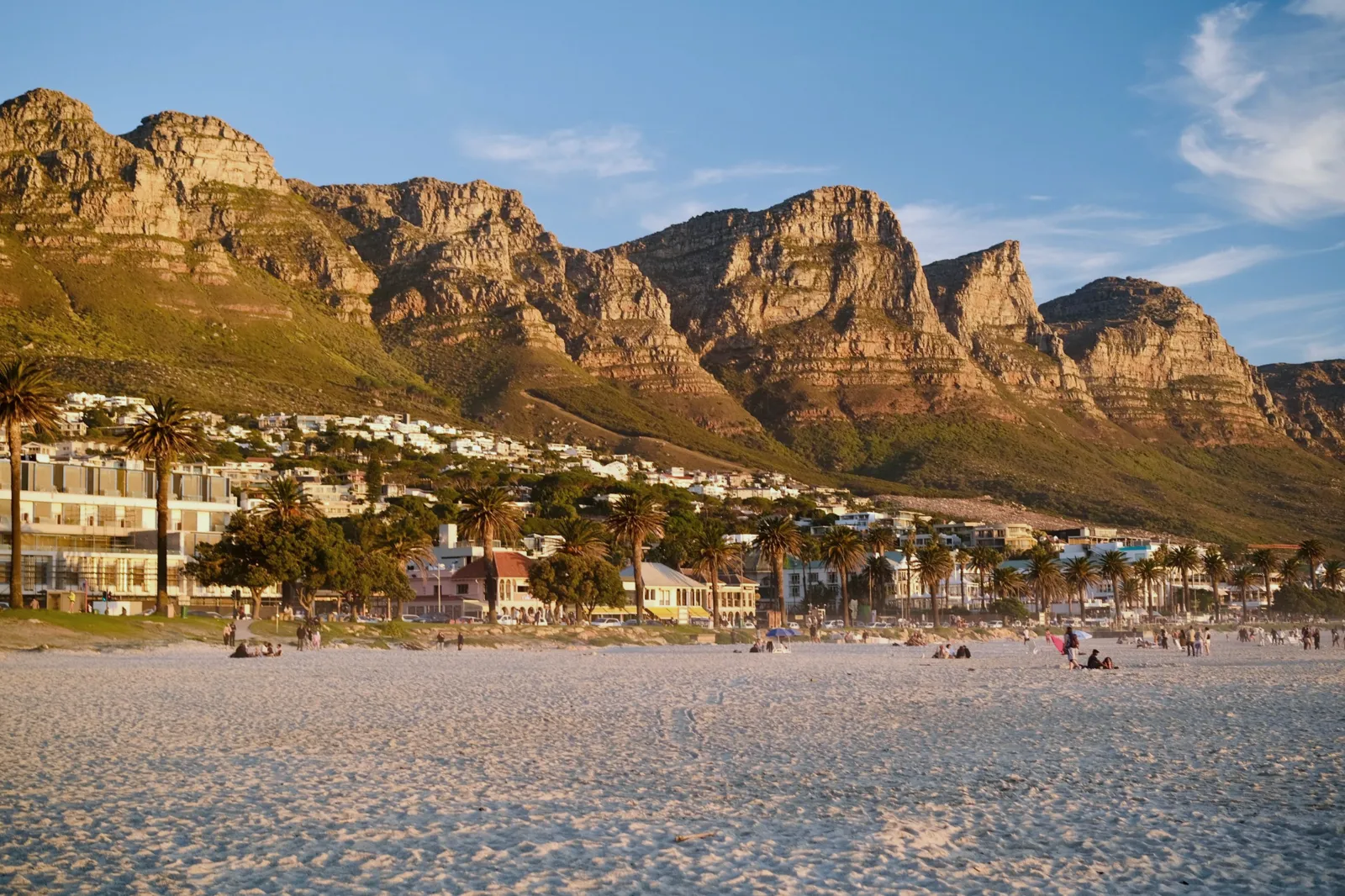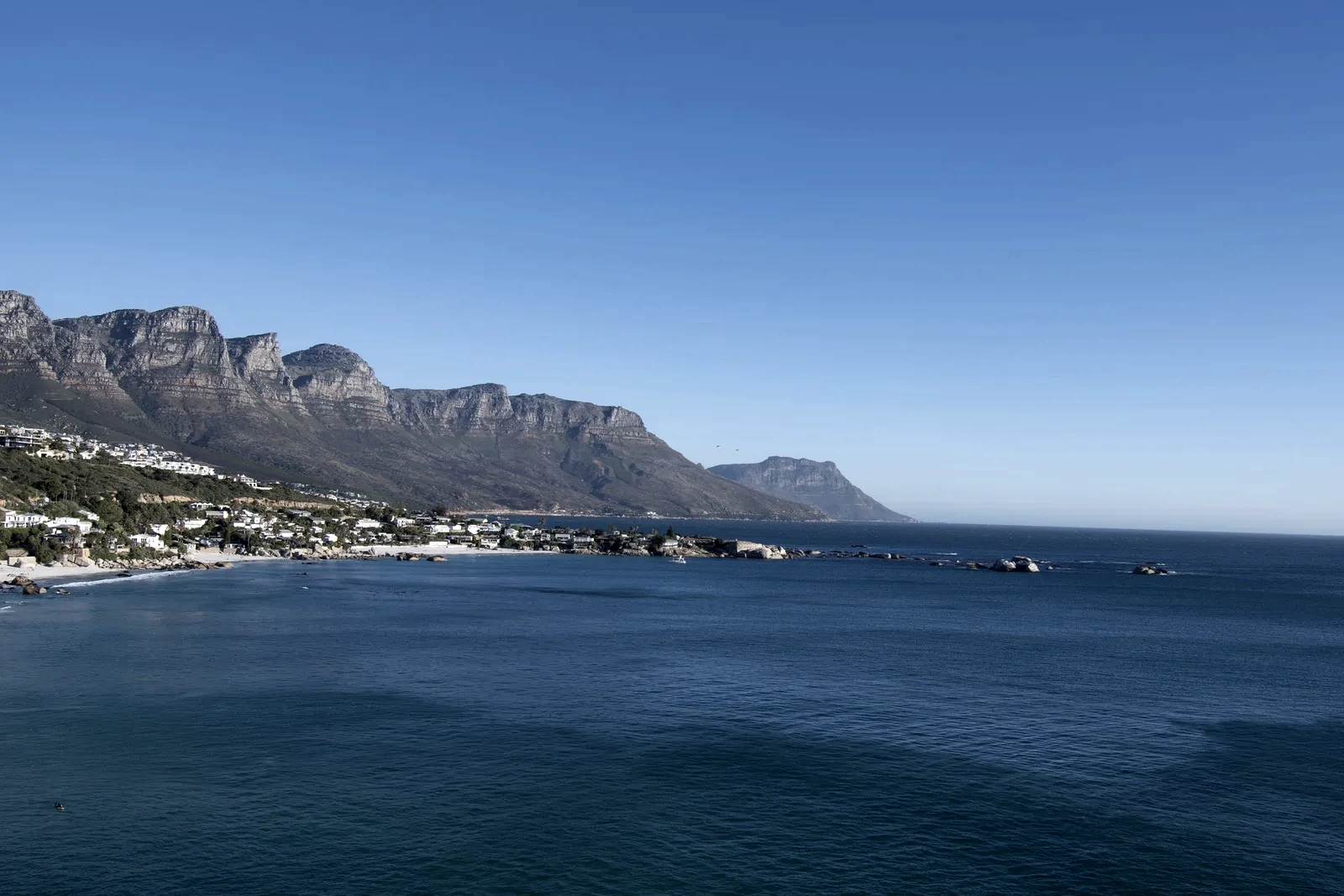
Between Hout Bay and Noordhoek, Chapman’s Peak follows the mountainside above the Atlantic. It is a short stretch of road, but the viewpoints make it worth allowing more time than the distance suggests.
Nine kilometres, 114 bends
Chapman’s Peak Drive is only 9 km long, but it packs in 114 bends carved into the mountainside above the Atlantic. It links Hout Bay to Noordhoek on the west coast of the Cape Peninsula. On paper it is a fifteen-minute ride. In practice, allow far more: the viewpoints are there to be used.
The speed limit is 40 km/h, and stopping on the yellow lines is not allowed: you pull over only in the designated bays. On a motorcycle that relaxed pace is an advantage. You have time to look, to frame a shot, to breathe, without ever feeling you are slowing down for nothing.
Two directions, different views
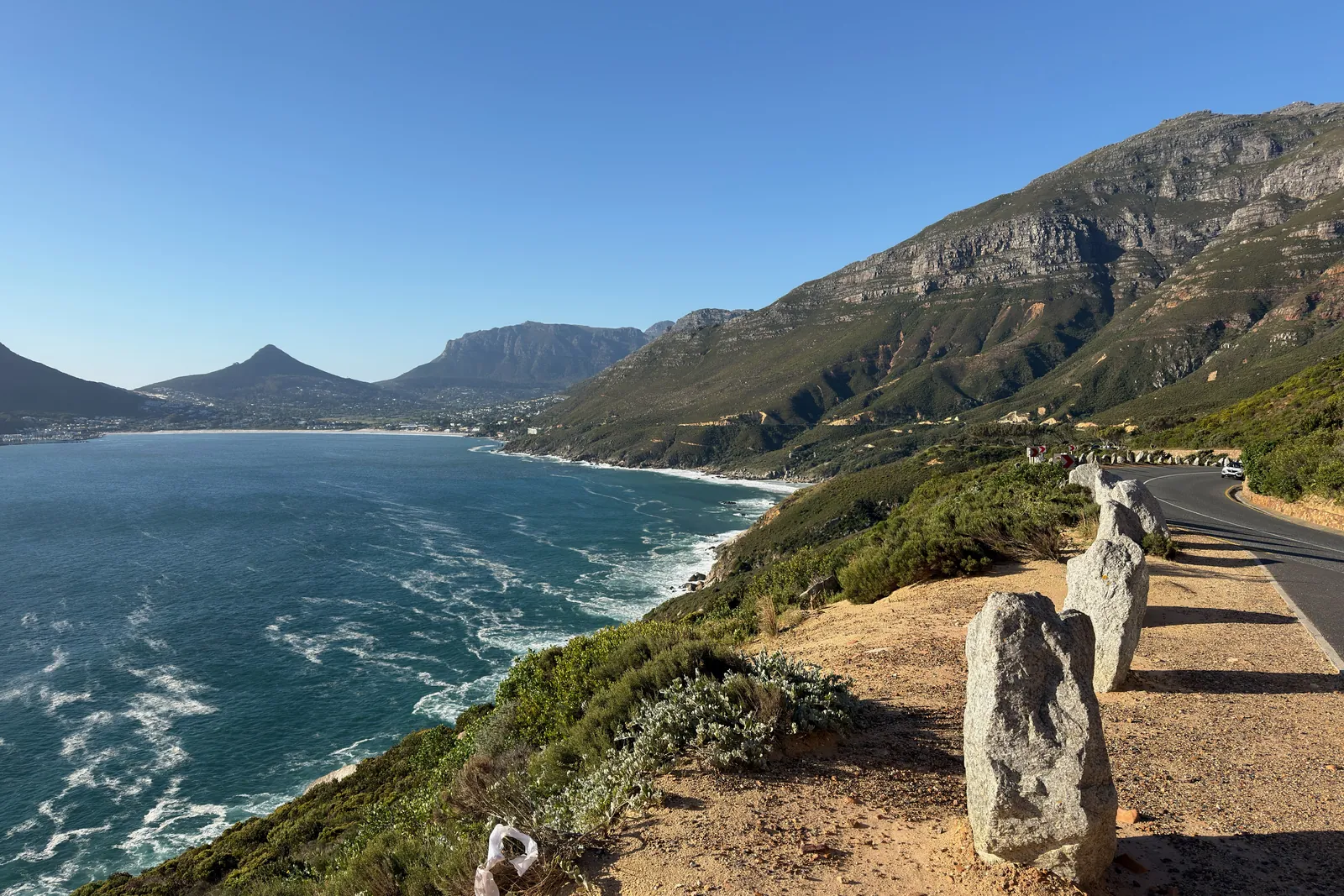
From Hout Bay, the road climbs above the bay before rounding the slopes towards Noordhoek. In the opposite direction, the long beach frames the opening section before the views gradually turn towards Hout Bay. The best direction depends on the rest of your itinerary and where you would like to stop.
On a motorcycle, the perspective changes quickly. To take in the scenery properly, pull into a designated stopping place, switch off the engine and remove your helmet. The sound of the ocean becomes part of the experience.
Hout Bay and Noordhoek: two stops worth making
Chapman’s Peak is not only about the road: both ends deserve a break. Hout Bay is a fishing harbour tucked into an amphitheatre-shaped bay, with colourful boats, a market and seafood restaurants by the water. It is an excellent start or finish for a motorcycle ride, and the ideal place for lunch before or after the climb.
On the Noordhoek side, the road opens onto one of the longest beaches on the peninsula, several kilometres of sand that you glimpse from the last bends. You can walk there, meet horse riders early in the morning, or simply stop to watch the Atlantic roll in. This contrast of cliff and beach is one of the reasons the stretch is photographed so often.
A road cut into the rock
Construction began in 1915 at the Hout Bay end, with work starting from Noordhoek in 1916, using convict labour. The road opened on 6 May 1922 after seven years of work. It was hewn straight out of the rock face, and you can still see it today: the cliff on one side, the drop and the ocean on the other.
The story has difficult chapters too. Rockfalls closed the road in January 2000, and it only reopened in December 2003, as a toll road, with catch fences, a protective structure and a half-tunnel cut into the rock. It was closed again for major upgrade work in 2008 and reopened in October 2009. When it is closed today, the reason is the same: safety comes first.
Where to stop for photos
The designated bays follow one another along the road, each with its own angle: some open onto Hout Bay and the silhouette of the Sentinel, others plunge towards the ragged coastline and the long beach at Noordhoek. Take your time rather than shooting everything from one stop: from one viewpoint to the next the light falls differently, and the motorcycle, parked at the cliff edge, gives the landscape its scale.
For your own safety and for others, never stop outside the designated bays or on the yellow lines. Keep a wipe for your visor, too: the salty spray quickly leaves a film on the plastic.
Toll and road status
The road is tolled. For a motorcycle the fee is R45, once-off, VAT included (the rate shown on the road’s official website when this article was written; it may change). You can pay by cash or card, except American Express and Diners Club. Reduced rates exist for registered regular users, but they are not aimed at a visitor passing through.
Above all, check that the road is open before you commit to it. It closes in bad weather or when there is a rockfall risk, sometimes at short notice, and the official website shows the current status. For the wider weather picture, see When to plan a motorcycle trip to Cape Town.
Planning for the light
A morning ride and a late-afternoon crossing produce very different photographs. The season, cloud cover and position of the sun matter more than a single recommended time. If sunset photography is part of your plan, arrive at your chosen viewpoint early enough to watch the light change.
From late winter to early spring, watch the sea as well: southern right whales often come close to shore, and the height of the road makes a superb vantage point.
Riding Chapman’s Peak safely
The road is well maintained, but it asks for attention. The wind can blow in side gusts, especially at exposed corner exits. After rain or strong wind, gravel and small stones may be on the surface: leave extra braking margin and do not take the bends at the limit. Cyclists are numerous, especially at weekends: only overtake when visibility allows.
You ride on the left, as everywhere in South Africa. In hairpins, the instinct to drift back to the right returns quickly for riders from continental Europe: stay firmly in your lane, look far through the curve and let the motorcycle do the work. For all the habits to build, read riding in South Africa by motorcycle and safety reflexes on a motorcycle in Cape Town.
Chapman’s Peak through the seasons
In summer (November to March) the days are long and the evening light stretches late: it is the ideal period to ride it in the late afternoon. The south-easter, which Capetonians sometimes call the “Cape Doctor”, can blow hard across the peninsula, however: expect gusts, and the road may close for a few hours because of it.
Autumn brings clearer air, pleasant temperatures and fewer people at the viewpoints. Spring offers an often spectacular sea and, sometimes, whales close to shore. Winter is the season of heavy swells and rain: closures are more frequent, and tours run on request only, weather permitting. To choose your date, see When to plan a motorcycle trip to Cape Town.
Before you go
Keep some margin for the rest of the ride: staying for sunset means riding part of the way back after dark, and night falls quickly in Cape Town. The advice on riding here and on safety applies as much as anywhere: leave nothing visible on the bike when you stop, and keep fuel in reserve.
Chapman’s Peak fits well into an Atlantic coast ride or a day around the peninsula. Give it room in the itinerary so you can enjoy a proper stop, rather than simply passing through.
Chapman’s Peak on a private motorcycle tour
Chapman’s Peak is one of the highlights of our private Cape Peninsula motorcycle tour. We ride it towards the end of the day, when the light softens, with stops at the viewpoints for photos: Mathis, a professional photographer, frames the road and your motorcycles from the best vantage points. If the road is closed on the day of your ride, the route is adapted without losing the thread of the day.
You can also pair it with the article a day ride around the Cape Peninsula to see how it fits into the full day. The tour is private, in English or French, at your pace.
Frequently asked questions
Is Chapman’s Peak open today?
It changes with the weather and rockfall risk. Check the road’s official website the same morning: the current status is shown there.
How much is the Chapman’s Peak toll for a motorcycle?
R45, once-off, VAT included, at the time of writing (November 2026). The rate may change: check it on the official website.
Can I stop anywhere on the road?
No. You pull over only in the designated bays, never on the yellow lines.
How long should I allow for Chapman’s Peak by motorcycle?
The ride itself takes about a quarter of an hour, but allow an hour with stops at the viewpoints.
What is the speed limit on Chapman’s Peak?
40 km/h, with 114 bends over 9 km.
Cape Ride Adventures
Explore the Cape Peninsula motorcycle tour